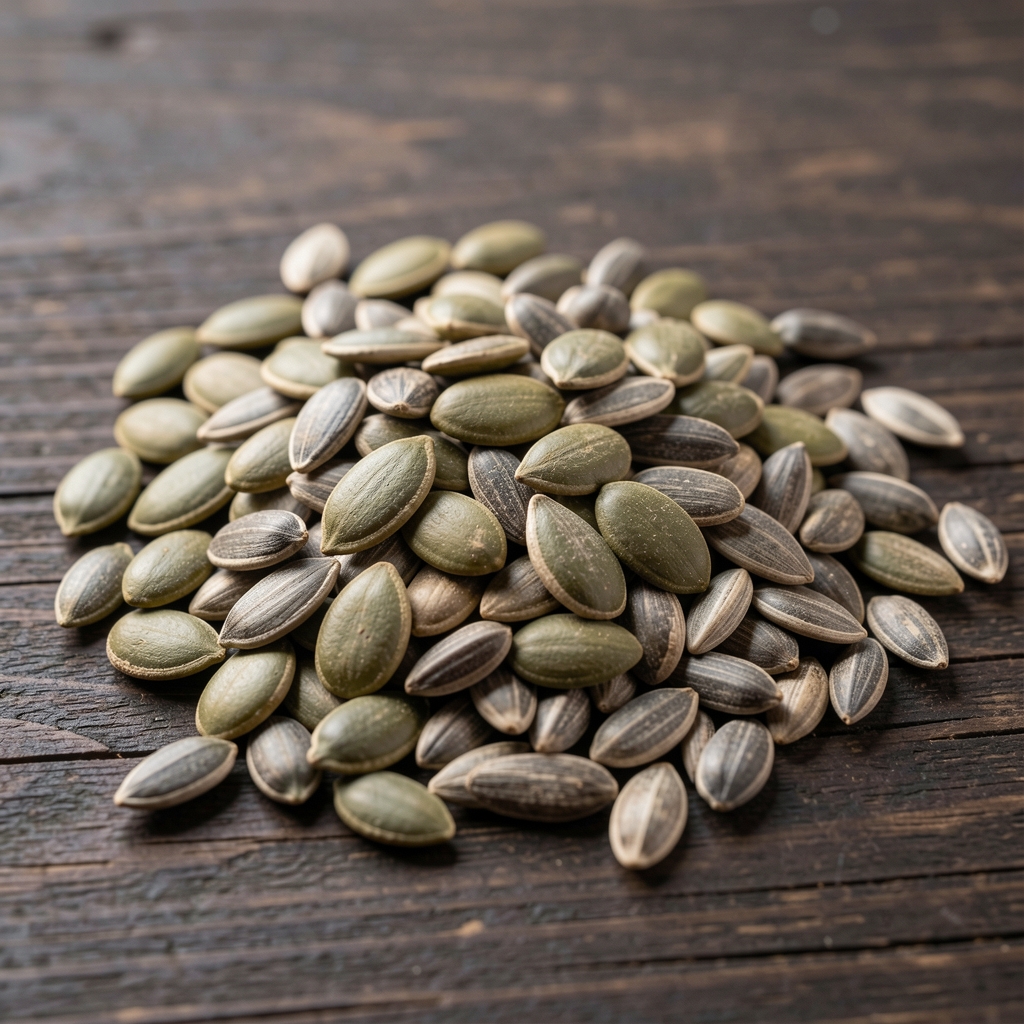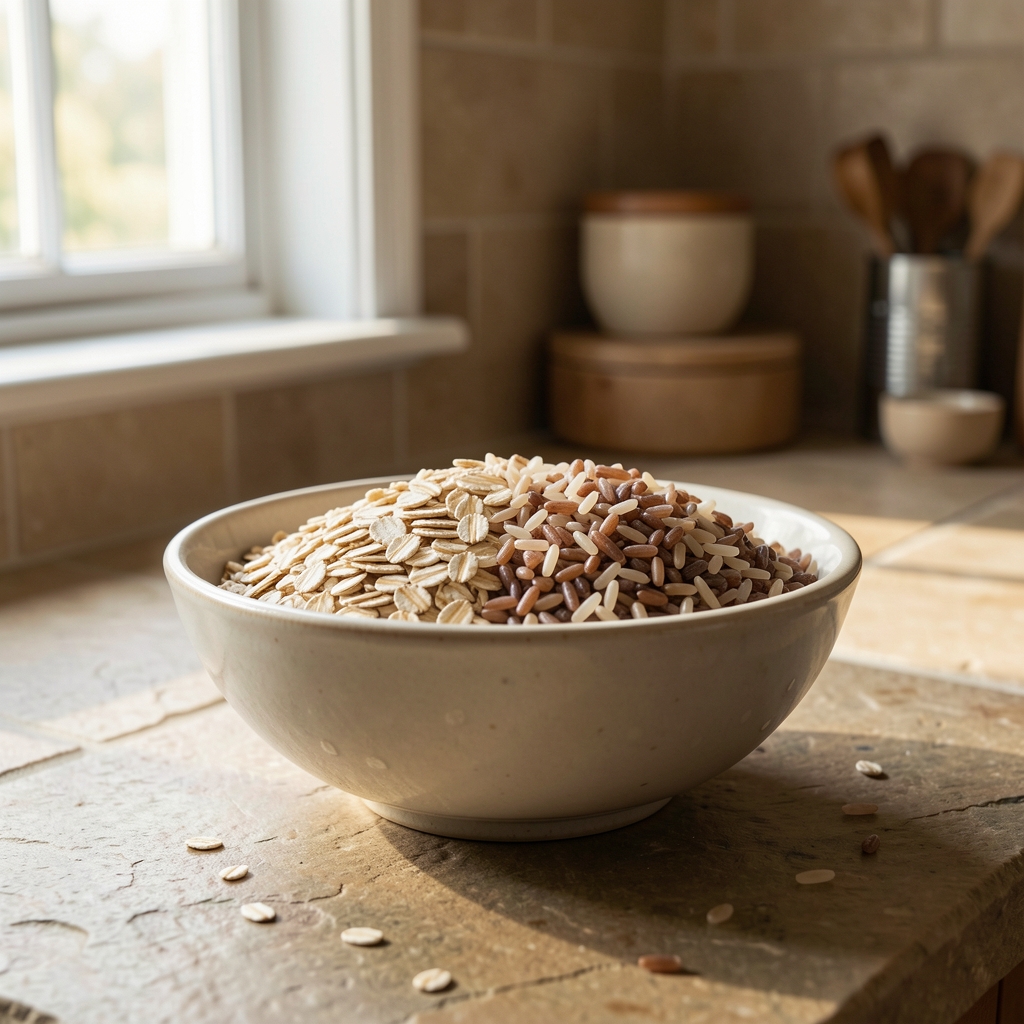
The grain shelf in a well-stocked kitchen holds a quiet record of nutritional decisions — oats from last winter, a half-open bag of pearl barley, a jar of brown rice. What that shelf actually delivers, in energy and fibre, depends less on what is purchased and more on what survives the week intact.
The Case for Retained Fibre
Whole grains carry their fibre in the bran layer — the outermost edible part of the grain that processing most commonly removes. For men over 35, fibre performs several functions that extend well beyond digestive regularity. It moderates the rate at which carbohydrates enter the bloodstream, which supports stable energy availability across the working day without the peaks and troughs associated with refined grain consumption.
Published dietary guidelines consistently recommend between 25 and 30 grams of fibre per day for adult men, a figure that most desk-based workers fall short of. The British Nutrition Foundation's dietary reference values note that the average adult in the UK consumes approximately 18 grams per day — a meaningful gap that whole grains can begin to close without requiring significant changes to meal structure.
The key distinction is between whole grain and wholemeal. Wholemeal bread, for example, uses flour that has been finely milled even if the whole grain components are retained. The grinding process breaks down particle size, which affects the speed of digestion. Coarser whole grains — barley, intact oat groats, whole rye — take longer to break down and produce a more sustained energy pattern than fine wholemeal flour.
Grains Worth Keeping on the Shelf
This review assessed seven common grain varieties against three criteria: fibre content per 100g cooked, preparation time under standard kitchen conditions, and retention of nutritional value after the most common cooking methods — boiling, toasting, and overnight soaking.
| Grain | Fibre / 100g cooked | Prep time | Retention after boiling |
|---|---|---|---|
| Pearl barley | 3.8g | 35–45 min | High |
| Rolled oats | 2.0g | 5–10 min | High |
| Brown rice | 1.8g | 25–35 min | Moderate |
| Whole rye kernels | 6.2g | 50–60 min | High |
| Quinoa | 2.8g | 15 min | High |
| Buckwheat groats | 2.7g | 10–15 min | Moderate–High |
| Spelt berries | 3.9g | 40–50 min | High |
Source: composition data adapted from UK food composition tables (McCance and Widdowson, 9th edition).
Fitting Grains into a Weekly Plate
The practical obstacle to whole grain consumption is not knowledge — most men who read about nutrition know that brown rice outperforms white rice on fibre content. The obstacle is time and planning. A bag of rye berries requires sixty minutes of active simmering, which is not a realistic option on a Tuesday evening after a full working day.
The most effective approach this review identified is batch preparation on a Sunday — cooking a single large batch of one or two grain varieties and refrigerating the result. Cooked whole grains hold well under refrigeration for four to five days without meaningful loss of fibre content. Pearl barley cooked in bulk on a Sunday appears in salads, grain bowls, and as a side on at least three weeknight meals. The preparation commitment is thirty-five minutes, once.
Rolled oats require no batch preparation at all. Five minutes of active cooking in the morning — with no additional ingredients required beyond water and a small pinch of salt — delivers a nutritionally meaningful breakfast that covers approximately eight percent of the daily fibre target. Adding a tablespoon of ground linseeds increases that figure by another two to three grams.
"The grain shelf functions as a planning document. What is there on Monday reflects what was decided on Sunday."
— Field note, February 2026
Portion Awareness Without Counting
Portion control for men in the context of whole grains is less about caloric restriction and more about energy distribution across the day. The practical question is not "how much" in grams but "when" — the timing of grain-based carbohydrate intake relative to activity levels has a measurable effect on how that energy is used.
A useful working rule: the largest grain portion of the day belongs at the meal before the most active part of the day. For most desk workers, that means lunch, not dinner. An evening meal weighted toward protein and vegetables, with grains as a minor component, produces a more manageable energy pattern overnight and into the following morning than the reverse arrangement.
Portion sizing by hand remains a reliable field estimate: a loosely cupped palm holds approximately 60–80g of cooked grain, which represents a practical single serving for a main meal alongside protein and vegetables. Two servings — both palms — covers the grain component of a larger meal without requiring a kitchen scale.
Seasonal Availability and Sourcing
Whole grains are one of the few dietary staples where seasonal sourcing has a tangible effect on quality. British-grown rye and oats harvested between August and October tend to be higher in moisture content when purchased close to harvest, which affects both shelf life and taste. Several UK-based grain merchants now sell directly to households, with harvest dates listed on their packaging — a small but meaningful piece of supply chain transparency.
For men who eat seasonally as a habit rather than a project, the practical adjustment is modest: swap white rice for brown during the months when it is fresh-milled and available from domestic producers, and return to stored grain varieties in spring. The nutritional difference between old-crop and new-crop grain is measurable but not dramatic. The more significant effect is on cooking behaviour — new-crop grains require less water and cook more evenly, which makes the weekly batch-cooking routine more reliable.
The broader principle of seasonal eating habits is not to reconstruct a diet around the agricultural calendar but to introduce some variability into grain selection across the year. Rye in autumn. Barley in winter. Oats year-round. Buckwheat and quinoa as fillers when the shelf runs thin. That rotation, if maintained without rigidity, produces a more diverse fibre profile than any single grain choice.
- ■Whole rye kernels and spelt berries have the highest fibre content of commonly available grains, at 6.2g and 3.9g per 100g cooked respectively.
- ■Batch cooking on a single day of the week reduces the preparation barrier without requiring daily commitment.
- ■Coarser grain forms — intact kernels rather than fine flour — produce a slower energy release and more sustained availability across the working day.
- ■Placing the largest grain portion at midday, before the most active period, distributes carbohydrate energy more usefully than back-loading it at dinner.
- ■Seasonal rotation — varying grain types across the year — supports a more diverse fibre intake than a fixed single-grain habit.