The morning plate is the first nutritional decision of the day. It sets the carbohydrate and protein baseline from which the body operates for the following four to five hours. For a man who sits at a desk for most of the working day, that baseline determines more about his afternoon energy levels than any subsequent meal.
Why Protein at Breakfast Matters for Desk Workers
Most published dietary guidance on breakfast protein focuses on appetite regulation — specifically, the observation that a higher-protein morning meal reduces the likelihood of significant mid-morning hunger and associated snacking behaviour. For desk workers, this effect is particularly relevant because the sedentary environment of office work provides none of the physical feedback cues that regulate eating behaviour in more active settings.
The European Journal of Specialist Nutrition has published several studies noting that breakfasts providing at least 25–30g of protein are associated with improved satiety scores through to midday compared with carbohydrate-dominant breakfasts of equivalent caloric content. The mechanism is reasonably well established: protein stimulates the release of satiety-signalling hormones more effectively than carbohydrates at equivalent energy loads.
For the average man over 35, reaching 25–30g of protein at breakfast is achievable without planning an elaborate meal. Three large eggs deliver approximately 18–19g. A 150g portion of full-fat Greek yoghurt adds another 10–12g. Together, that is a nutritionally complete protein component requiring fewer than ten minutes to prepare.
Constructing the Balanced Plate: Protein, Grain, Fat
A structurally balanced morning plate for an active lifestyle divides into three components: protein, a slow-digesting carbohydrate source, and a healthy fat. The proportions are not fixed — they vary with the morning's activity level and the likely demands of the day — but the presence of all three categories is what distinguishes a nutritionally planned meal from a habit-driven one.
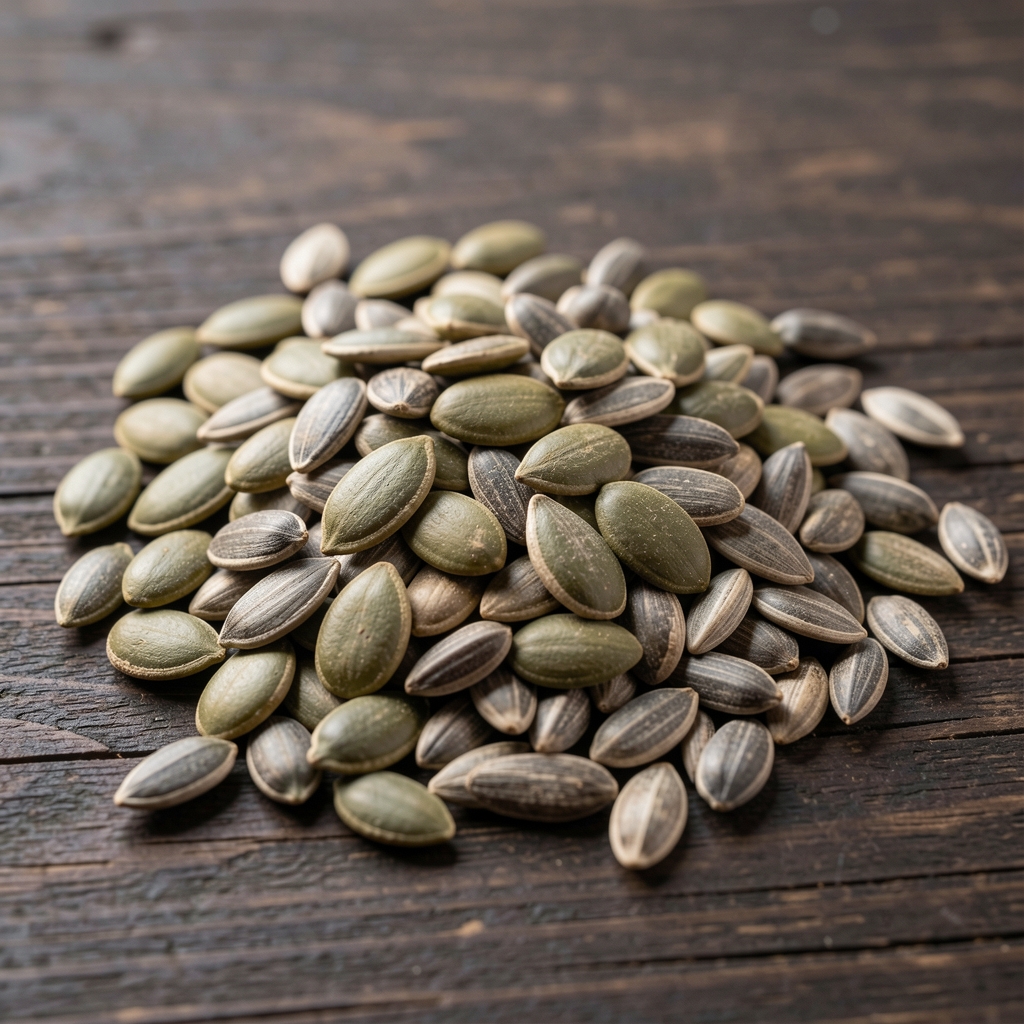
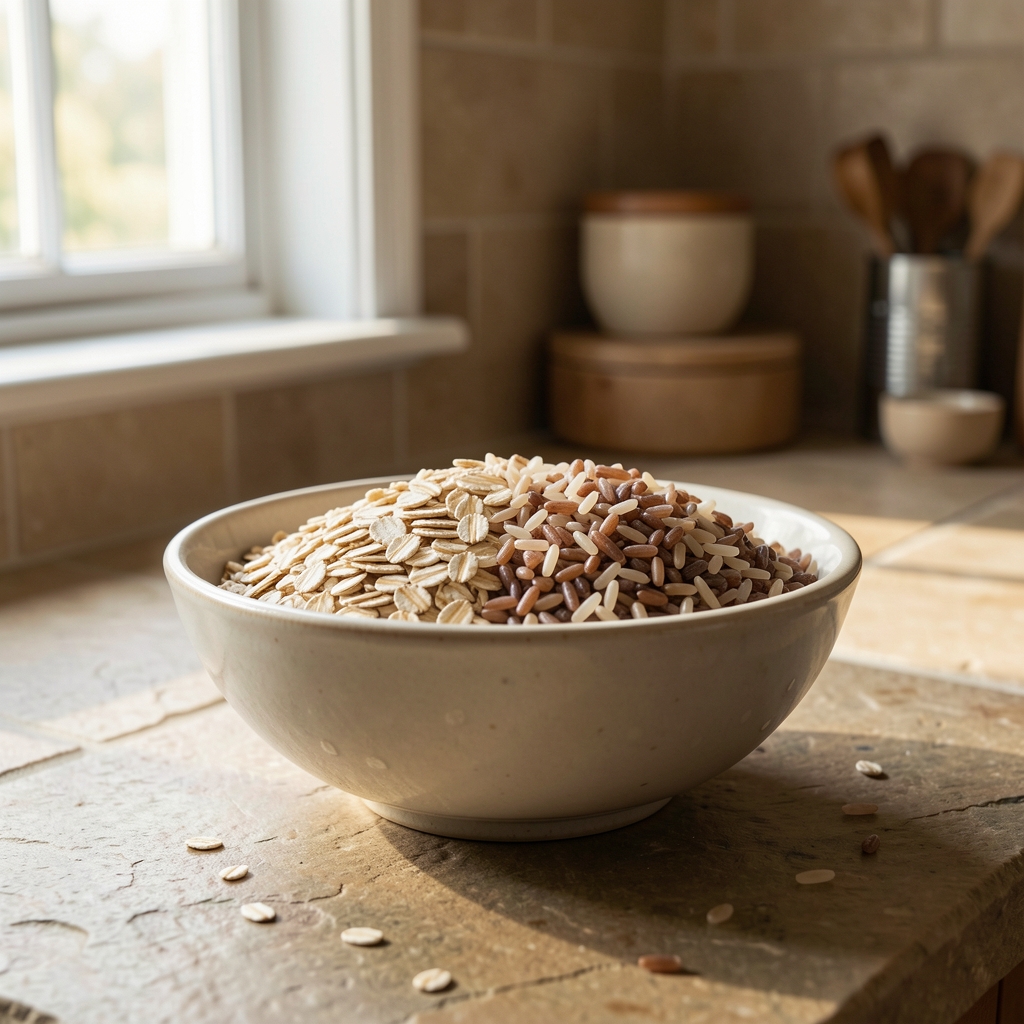
The protein component has been discussed. For the carbohydrate element, the whole grains reviewed in our March piece remain the most useful option: rolled oats, whole grain rye bread, or a grain-based base under the egg component. The fat component is most reliably supplied by half an avocado, a tablespoon of olive oil used in cooking, or a small handful of seeds added to oats or yoghurt. Seeds — particularly pumpkin seeds and sunflower seeds — also introduce meaningful quantities of zinc-rich foods and selenium-rich foods into the morning intake, making them a multi-purpose addition.
The complete plate is not a recipe. It is a framework that accommodates the available ingredients on any given morning without requiring daily shopping or precise nutritional calculation. The test is whether all three categories are represented, not whether specific foods are present.

The Time Constraint Is Real
Writing about morning nutrition is complicated by one persistent practical reality: mornings are the part of the day over which most working men have the least control. The commute, the school run, the early meeting — the variables that compress the available kitchen time are not theoretical. They are the actual conditions under which a morning meal either happens or does not.
The most reliable observation from this review is that the total preparation time for a nutritionally complete morning plate is between eight and twelve minutes. Scrambling or poaching two to three eggs takes five minutes. Toasting rye bread takes two. Slicing an avocado or portioning Greek yoghurt takes one. That is a twelve-minute morning. On the days when even twelve minutes is not available, the minimum viable option — Greek yoghurt with seeds and a piece of whole grain toast — can be assembled in four.
The strategic adjustment that most consistently supports a better morning plate is not the morning itself — it is the previous evening. Having eggs in the refrigerator, bread bought on the way home, an avocado at the right stage of ripeness: these are preparation decisions, not morning decisions. The meal becomes reliable when its components are present without requiring a morning shopping judgement.
"The morning plate is assembled the evening before. The actual morning is just execution."
— Field note, March 2026
Post-Workout Mornings: A Different Plate
On mornings that follow or include physical training — a gym session, a run, a cycling commute — the protein requirement for recovery nutrition shifts the balance of the morning plate. Post-workout nutrition research consistently supports the importance of protein intake within the first 30–60 minutes after resistance or high-intensity exercise, when the muscle protein synthesis window is most active.
For practical purposes, a post-exercise morning plate should aim for a higher protein-to-carbohydrate ratio than the standard day. Four eggs rather than two, a larger yoghurt portion, or the addition of a protein-dense food — tinned sardines, smoked salmon, or cooked legumes carried over from the previous evening — shifts the plate toward the recovery profile without requiring a supplement.
Daily hydration is also more relevant on post-exercise mornings than is typically acknowledged in meal planning advice. A minimum of 400–500ml of water before the morning plate, rather than alongside it, supports both absorption and the early rehydration process after sweat loss. This is not a complex intervention. A glass of water before breakfast is a reasonable daily habit regardless of exercise status, but on training days it carries more nutritional significance.
Vitamins That Belong at Breakfast
Several fat-soluble vitamins — specifically vitamins A, D, E and K — are absorbed more effectively in the presence of dietary fat. For men who supplement with vitamin D, taking it at breakfast alongside a fat-containing component (the avocado, the eggs, the olive oil) produces better absorption than taking it on an empty stomach or with a fat-free meal.
Vitamins for active living are most efficiently delivered through food rather than supplementation where possible. The morning egg provides vitamin D, B12, and choline. Pumpkin seeds on the yoghurt contribute zinc, which supports normal cognitive function and immune health. A slice of rye bread delivers B vitamins including folate. None of these require special sourcing — they are present in straightforward ingredients available in any UK supermarket.
The cumulative nutritional picture of a well-constructed morning plate is considerably richer than its individual components suggest. This is the practical argument for treating breakfast as a structural decision rather than a convenience — the vitamins, minerals, and macronutrients distributed across the morning plate form a foundation that supplements cannot reproduce with the same efficiency, reliability, or culinary satisfaction.
- ■A protein target of 25–30g at breakfast is achievable with two to three eggs plus Greek yoghurt and requires fewer than ten minutes to prepare.
- ■The three-component framework — protein, slow carbohydrate, healthy fat — is a structural guide, not a recipe. The specific foods can vary daily.
- ■Preparation reliability depends on evening planning, not morning willpower. Having components present removes the decision from the morning entirely.
- ■Post-exercise mornings warrant a protein-heavier plate and pre-meal hydration of at least 400ml before eating.
- ■Fat-soluble vitamins absorb more effectively when taken alongside a fat-containing food — breakfast is the optimal moment for vitamin D in particular.