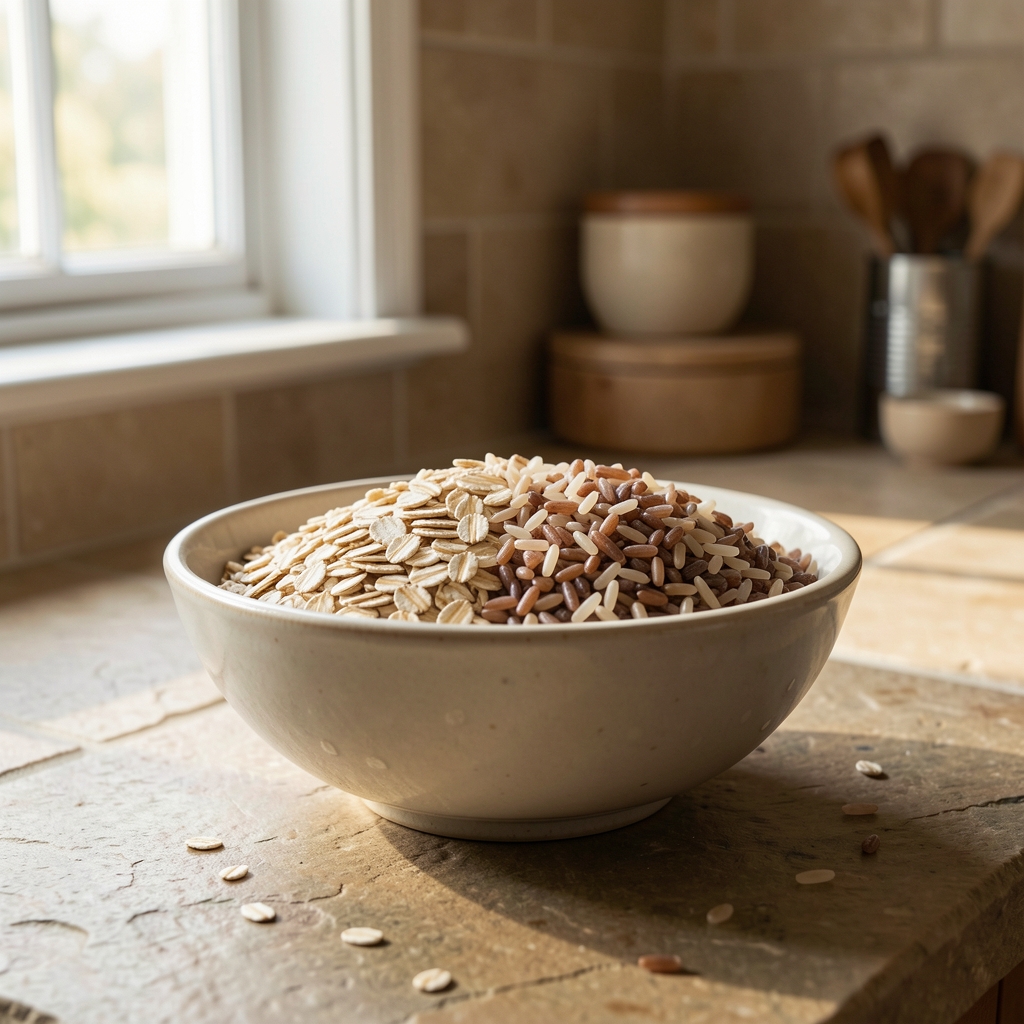
London, February 2026. A week's worth of meals documented at a desk worker's kitchen table in Bermondsey produced a recurring pattern: zinc and selenium — two minerals frequently discussed in nutrition writing about men's everyday health — appeared less consistently than the available food sources would suggest. Not because the foods were absent from the diet, but because the preparation habits and timing of meals had not yet been adjusted to include them reliably.
What the Weekly Record Showed
The documentation covered five consecutive working days — Monday through Friday — with each meal and snack recorded at the time of consumption rather than reconstructed at the end of the day. This distinction matters. End-of-day dietary recall is consistently shown in published nutritional research to underreport between-meal intake by fifteen to thirty percent, particularly for snacks and small additions like seeds or nuts.
What the record revealed, across the five days, was that zinc-rich foods appeared on three of the five days in meaningful quantities, and selenium-rich foods appeared on two. The remainder of the meals were nutritionally competent by most conventional measures — adequate protein, sufficient whole grains, moderate fat intake — but the mineral picture was uneven in a way that would not be apparent from a simple review of what was being eaten.
The finding aligns with published dietary survey data for UK working-age men, which consistently identifies zinc as one of the minerals most likely to fall below reference nutrient intake in the absence of deliberate dietary attention. The picture for selenium is similar, with the additional complication that selenium content in foods grown in UK soil tends to be lower than in North American or South American equivalents, owing to differences in soil selenium concentration.
"The mineral picture was uneven in a way that would not be apparent from a simple review of what was being eaten."
— Field notes, February 2026
Zinc-Rich Foods in a Practical Working-Week Context
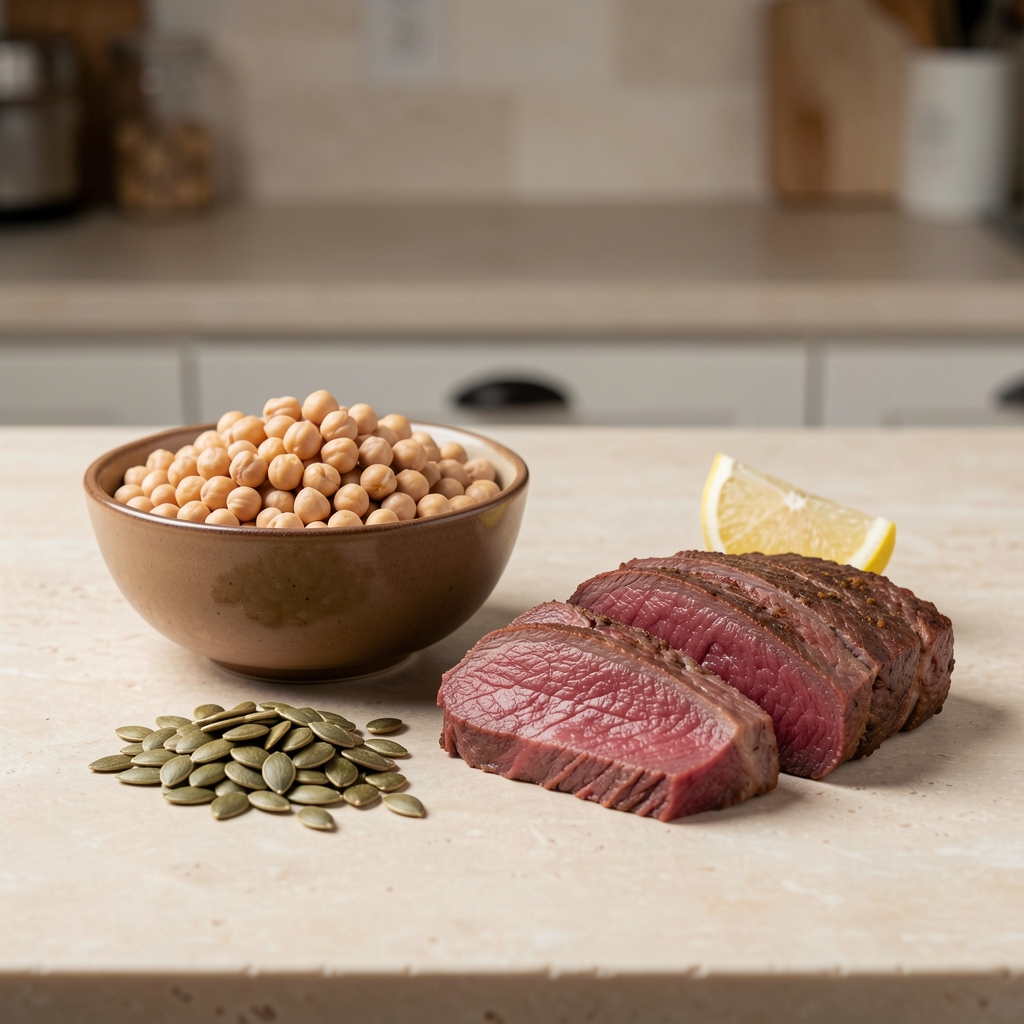
Zinc contributes to normal cognitive function and immune health. Its primary dietary sources — red meat, shellfish, legumes, nuts, and seeds — are all foods that appear in ordinary UK eating patterns, but their frequency and portion size within that pattern vary considerably depending on meal preparation habits and time availability.
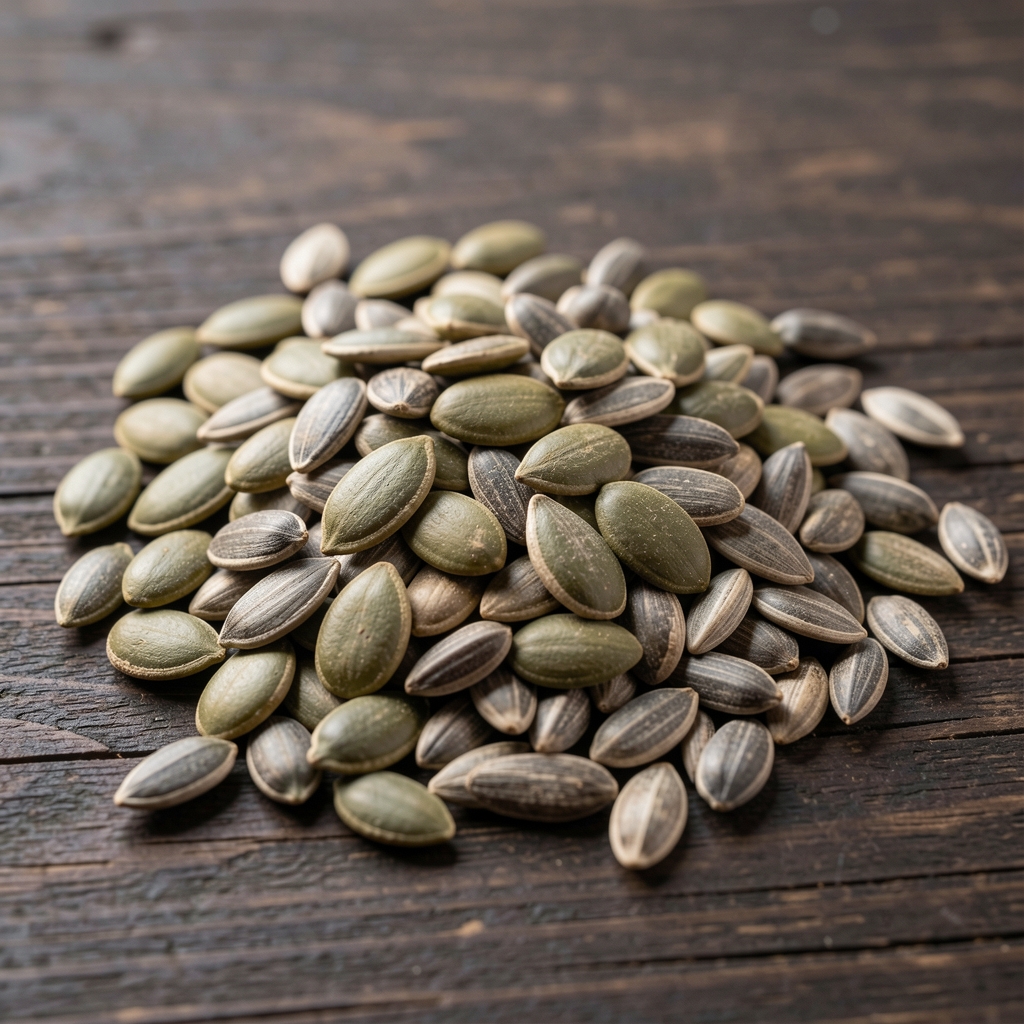
Pumpkin seeds represent one of the more practical zinc-rich foods for desk workers, because they require no preparation, travel easily, and can be added to meals already in the rotation — porridge, salads, yoghurt — without changing the structure of the meal. A thirty-gram portion of pumpkin seeds provides approximately four milligrams of zinc, against a UK reference nutrient intake of 9.5 milligrams per day for adult men.
Lean red meat — beef, lamb — remains among the most bioavailable sources of dietary zinc, and the form of zinc in animal foods is absorbed more effectively than the form found in plant sources, where phytates in whole grains and legumes can bind to zinc and reduce its absorption. This is not an argument against plant-based zinc sources; it is a point about meal composition. Pairing legume-based zinc sources with an acidic component — lemon juice, vinegar — or with a fermented food can partially reduce the phytate effect.
Selenium: The Geography of the Soil and the Kitchen
Selenium contributes to the protection of cells from oxidative stress and to normal immune function. The recommended daily intake for adult men in the UK is seventy-five micrograms. The challenge with selenium in a UK dietary context is, as noted above, that domestic food crops are lower in selenium than those grown in selenium-rich soils elsewhere, so the same food item purchased in a UK supermarket may carry significantly less selenium than the published food composition tables — which are often based on North American samples — suggest.
Brazil nuts are the single highest dietary source of selenium by a considerable margin: a single Brazil nut contains between seventy and ninety micrograms, depending on soil origin. The practical note here is that two Brazil nuts per day represents an effective and low-effort means of achieving the reference intake, without requiring any significant change to the broader meal pattern.
Other useful selenium sources include eggs, canned tuna, and lean meat — all of which are typically already present in the eating patterns of the men most likely to be reading this publication. The gap between adequate selenium intake and current intake is, in most documented cases, not a gap in food access but a gap in awareness and consistent inclusion.
The Pattern That Emerged and What It Suggests
The five-day record pointed to a specific structural issue in the eating pattern rather than a general nutritional deficiency: the meals being prepared were nutritionally competent in macronutrient terms but had not been intentionally designed to include consistent mineral sources. This is the characteristic pattern of diets built around convenience and preference rather than around nutritional composition.
The adjustment required is not large. Adding pumpkin seeds to breakfast three to four times per week, ensuring lean meat or shellfish appears in at least two main meals, and adding two Brazil nuts to the daily snack pattern would, based on standard food composition data, move the zinc and selenium picture from inconsistent to reliably adequate — without requiring any restructuring of the existing meal pattern.
The broader point is about the usefulness of documentation. A week of written records reveals structural patterns that neither intuition nor memory can reliably capture. The nutritional architecture of a week is not visible in any single meal — it emerges from the cumulative record of what was actually on the table.
- ■ Zinc-rich foods appear less consistently in desk-worker eating patterns than food availability alone would predict.
- ■ Pumpkin seeds offer a practical, no-preparation zinc source for addition to existing meals.
- ■ Selenium content in UK crops is lower than published food tables often indicate; Brazil nuts are the most reliable single source.
- ■ Phytate content in plant zinc sources can be partially countered by acidic accompaniments or fermented foods.
- ■ Written meal documentation over five days reveals mineral patterns that end-of-day recall consistently underestimates.